

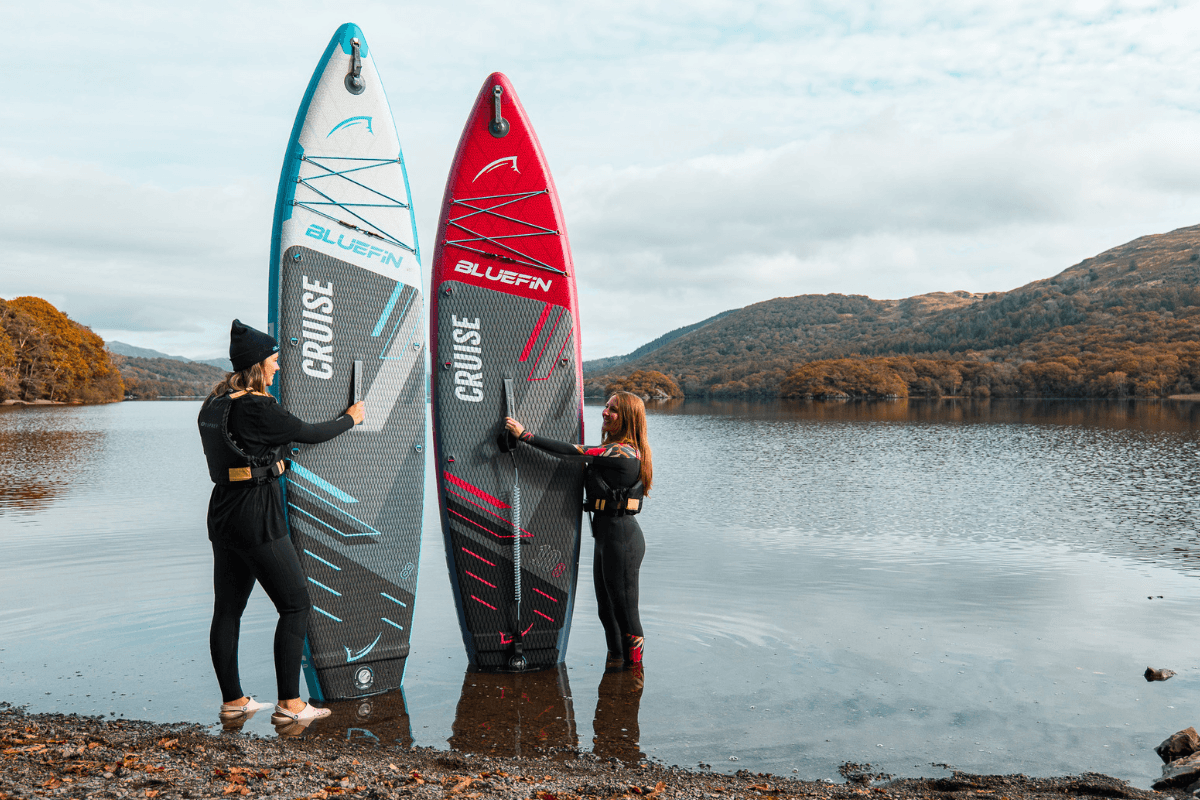
European summer might be ending, but your paddleboarding season does not have to end with it. From Germany's inland lakes to Alpine waters, Dutch waterways, Atlantic coastlines and the warmer shores of southern Europe, paddleboarding after summer in Europe can open up an entirely different kind of adventure. The peak holiday crowds begin to thin, temperatures become more comfortable in many regions and familiar locations change colour as autumn arrives.
There is one important difference from summer: preparation becomes increasingly important. Europe covers an enormous range of climates and paddling environments. A September paddle on the Mediterranean cannot be treated the same way as an October session on an Alpine lake. There is no single European autumn SUP season. Instead, there are local conditions to understand and some very good reasons to keep paddling.
1. Europe's Popular Paddleboarding Locations Become Quieter
Summer puts enormous pressure on many European lakes, beaches and coastal destinations. Warm weekends can bring swimmers, pleasure boats, rental kayaks, sailing schools, paddleboarders and large numbers of visitors onto the same stretch of water. Once the main holiday season finishes, that atmosphere often changes.
September can offer the same destination with considerably more breathing room. For paddleboarders, quieter conditions have practical benefits.
You can:
Launch without feeling rushed
Practise turns with more space
Explore familiar shorelines at a slower pace
Spend more time concentrating on technique
Enjoy photography without crowded backgrounds
Experience popular destinations outside peak tourism
This can be particularly appealing on inland lakes, where summer activity is often concentrated around beaches and established recreation areas.
Quieter Does Not Automatically Mean Safer
The same principle applies throughout Europe: fewer visitors may also mean fewer services. Rental stations may reduce opening hours. Seasonal facilities may close. Lifeguard provision can change from summer schedules. Greater peace and quiet should come with greater self-sufficiency. Carry a suitable means of communication, tell someone your plan and make sure you can deal with an unexpected swim or equipment problem. Autumn is not the time to assume somebody else will be nearby.
2. Autumn Transforms Europe's Lakes, Rivers and Coastlines
A landscape seen from a paddleboard already feels different from the same place viewed from shore. Autumn adds another layer. Across central and northern Europe, forested shorelines begin moving from green towards yellow, orange and red. Early morning mist can settle above sheltered lakes. Lower sun creates long reflections and familiar routes can suddenly look completely new. You do not need to travel farther to make SUP feel more adventurous. Sometimes you simply need to revisit somewhere at a different time of year.
That is especially true in countries with extensive lake and river networks. Germany is an obvious example. Many paddlers have easy access to inland water surrounded by woodland, towns and countryside, making autumn ideal for revisiting familiar local routes. The same applies across Austria, France, the Netherlands, Poland, Italy, Slovenia and elsewhere.
Build Your Paddle Around the Season
Instead of treating autumn as an inferior version of summer, make the season part of the experience.
Try:
A sunrise paddle on a sheltered lake
An autumn photography route
A short forest-lined river or canal journey
A relaxed paddle with friends followed by lunch
A familiar route specifically chosen to see the changing landscape
The best autumn paddles do not necessarily need to be the longest ones. They need to suit the conditions.
3. Extending the Season Helps You Become a Better Paddler
Skill development depends on repetition. Imagine someone who starts paddleboarding in June, goes out half a dozen times and finally begins feeling confident by August. They then put the board away for eight or nine months. By the following summer, some of that confidence has disappeared. Continuing into autumn gives your technique more time to develop.
Regular SUP sessions help balance, paddle control and movement around the board become increasingly natural. That matters whether your long-term goal is relaxed recreational paddling, touring farther from your launch point or simply feeling calmer on the water.
Use Quieter Sessions to Practise
Choose one skill each time you paddle. You could work on:
A more efficient forward stroke
Paddling straight without changing sides constantly
Sweep turns
Reverse strokes
Controlled stopping
Moving between standing and kneeling
Improving foot placement
Step-back turns when appropriate for your ability
Ten focused minutes is enough. Then enjoy the rest of the trip. Consistency is usually more useful than trying to learn everything in one long session.
Develop Your Judgement Too
Technical ability is only one part of progression. A better paddler also becomes more aware of weather, water and personal limits. That means being prepared to shorten a route or cancel altogether. If the wind is stronger than expected, choose somewhere more sheltered. If fog limits visibility, change the plan. If you are not equipped for the temperature of the water, stay ashore. Good judgement is one of the most valuable SUP skills you can develop.
4. Autumn SUP Keeps You Active and Outside
The end of summer can create an abrupt change in routine. Holidays finish. Evenings shorten. Outdoor plans become less automatic. Paddleboarding gives you a reason to keep looking for opportunities to get outside.
A SUP session involves continuous balance adjustments through your legs and core alongside repeated upper-body movement through the paddle stroke. But the appeal goes beyond exercise. Having an outdoor activity you genuinely want to do makes staying active easier. Instead of waiting for hot weather, you begin learning how different conditions affect your options.
A slightly cool, still morning can become more attractive than a hot but windy summer afternoon. You start asking better questions:
Where is sheltered from this wind direction?
Which lake works well for a short morning paddle?
Is the forecast better tomorrow?
How cold is the water?
Where can I launch legally?
Will I have enough daylight?
That knowledge gradually makes you a more independent paddler.
5. You Get More From Your SUP
A quality paddleboard should not have to spend most of the year inside its bag. If you already own one, extending your season creates more value from equipment you have already bought. It means more days outside, more places explored and more opportunity to develop your skills. It also supports a more sustainable attitude towards outdoor equipment.
Instead of seeing a SUP as a short-lived summer purchase, choose carefully, maintain it properly and keep using it. That approach fits closely with Bluefin's Built to Last philosophy, which focuses on durable construction and longer-term ownership. Using equipment for longer starts with looking after it.
Autumn SUP Maintenance
After your session:
Rinse away salt, dirt or sand where required
Remove leaves and debris from around the fin
Allow wet equipment to dry properly
Check the leash and other safety equipment
Inspect the board before storing it
Keep your equipment organised for the next suitable weather window
Good maintenance does not need to be complicated. It simply needs to become a habit.

Paddleboarding After Summer in Europe: Why Location Matters
Europe does not have one climate, one type of water or one universal set of paddleboarding rules. Local conditions can vary enormously.
Region |
Typical Autumn Consideration |
What Paddlers Should Think About |
Northern Europe |
Rapid cooling and shorter daylight |
Cold-water clothing, daylight and changing weather |
Germany and Central Europe |
Lakes and inland waterways can become significantly cooler |
Local access rules, water temperature and nature restrictions |
Alpine regions |
Cold mountain lakes and rapidly changing weather |
Water temperature, local wind effects and exposure |
Atlantic Europe |
Wind, swell, tides and changing coastal weather |
Marine forecast, tides and coastal experience |
Mediterranean Europe |
Milder conditions can extend the season |
Wind, local regulations and water traffic still matter |
Urban waterways |
Navigation rules and commercial traffic |
Local permissions, boat traffic and launch restrictions |
Across Europe, autumn conditions can vary significantly from one location to another. Rather than judging whether it is “warm enough” to paddle based on the month alone, focus on the conditions where you actually plan to launch. Water temperature, wind, weather, daylight and local restrictions are far more important than the date on the calendar. Checking these factors before every session will help you choose a safer, more enjoyable autumn paddle.
What to Wear for Autumn Paddleboarding in Europe
There is no single answer here either. September in southern Spain and October in Bavaria require very different decisions. Base your clothing on the conditions you will actually encounter.
Consider:
Water temperature
Air temperature
Wind
Distance from shore
Length of session
Your level of experience
How exposed the location is
What happens if you unexpectedly enter the water
Depending on those factors, appropriate equipment could range from lighter technical clothing in genuinely warm conditions to a suitable wetsuit or drysuit in colder water. The water temperature matters more than how pleasant the sun feels while you are setting up. Always carry warm, dry clothing for afterwards when temperatures are falling.
Paddleboarding Rules Across the EU: Check Locally
Paddleboarding rules can vary considerably across Europe, so there is no single set of rules that applies uniformly to every EU country, region or waterway.
Local requirements may depend on:
- The country or region
- The municipality
- The authority managing the waterway
- Nature conservation restrictions
- Commercial or recreational boat traffic
- Seasonal wildlife protections
- Rules specific to an individual lake, river or coastal area
Just because you can physically access the water does not necessarily mean paddleboarding is permitted there. Before exploring somewhere new:
- Check whether paddleboarding is permitted.
- Look for local or regional restrictions.
- Check whether designated launch points must be used.
- Look for nature conservation or seasonal access rules.
- Understand any relevant navigation requirements.
- Check local weather, water conditions and emergency information.
A few minutes of research before travelling can help you paddle more safely while protecting the waterways and environments you have come to enjoy.
Autumn Paddleboarding in Germany
Germany deserves particular attention because it has a strong paddling culture and a huge variety of inland water. It is also a good example of why local research matters.
The Deutscher Kanu-Verband notes that there are numerous restrictions on paddling for nature-conservation reasons and advises paddlers to find out where paddling is permitted before taking to the water. Its current SUP guidance also emphasises monitoring weather, respecting other water users and avoiding areas that are temporarily or permanently closed for environmental protection.
For German autumn paddlers, that means checking:
Whether SUP is permitted on the chosen water
Local conservation restrictions
Weather and wind conditions
Water temperature
Navigation traffic
Suitable entry and exit points
Remaining daylight
Germany's Lakes Can Be Ideal for Autumn SUP — With the Right Planning
Sheltered lakes can provide beautiful autumn conditions. But “lake” does not automatically mean “easy”. A large open lake can still produce significant wind exposure and changing surface conditions. Cold water also deserves serious consideration, particularly as autumn develops. Choose the location for the conditions, rather than choosing the date first and forcing the location to work. That mindset is useful anywhere in Europe.
Which Bluefin SUP Works for an Extended European Season?
Bluefin Cruise: Versatility for Everyday Adventures
The Bluefin Cruise is designed as a stable, responsive all-rounder for beginners and progressing paddlers. That versatility suits paddlers whose year might include local lakes, relaxed coastal sessions and general recreational exploring. For many people, one adaptable board is more useful than equipment designed for a highly specialised use case.
Bluefin Carbon: When You Want to Go Further
The Bluefin Carbon takes a more performance-focused approach, with Bluefin positioning it around stiffness, speed and control. It may suit paddlers who have progressed beyond their first sessions and are increasingly interested in longer distances or more efficient paddling. The same safety principle still applies. Board performance never turns unsuitable autumn conditions into suitable ones.
Bluefin Lite: Easy to Carry, Easy to Use
For beginners and casual paddlers who value portability, the Bluefin Lite takes a compact, lightweight approach. That can be particularly helpful when you want to keep spontaneous local sessions realistic. A board that is easy for you to transport and store is a board you may be more likely to use.
European Autumn SUP Checklist
Weather and Water
- Wind speed
Gusts
Wind direction
Water temperature
Air temperature
Rain and visibility
Tides or swell where relevant
Forecast changes during the session
Local Rules
- Is paddleboarding permitted?
Are there conservation restrictions?
Are specific launch points required?
Is commercial navigation present?
Are there seasonal closures?
Are local permits required?
Equipment
- Suitable personal flotation
Appropriate leash system for the environment
Waterproof case for phone
Clothing suited to possible immersion
Dry clothing for afterwards
Board, paddle and fin checked
Planning
- Choose a route within your experience
Tell someone where you are going
Know your launch and exit points
Leave plenty of daylight
Paddle with others where appropriate
Be prepared to cancel
Do not let the time spent travelling to a destination pressure you into launching. Conditions decide whether you paddle. Not your itinerary.

Summary: 5 Reasons to Keep Paddleboarding After Summer in Europe
Summer may be the most obvious season for SUP, but it is far from the only one.
There are five strong reasons to keep going:
Popular destinations become quieter, creating more space to enjoy the water.
Autumn transforms familiar landscapes, particularly around Europe's forests, lakes and rivers.
Regular paddling improves technique, instead of losing confidence during a long winter break.
SUP keeps you outdoors and active as summer routines finish.
You get more from the paddleboard you already own.
The important thing is recognising how much conditions vary across Europe. Autumn on a Mediterranean coast is not autumn on an Alpine lake. September in southern Europe can be very different from the same week in Germany or Scandinavia. Paddleboarding after summer in Europe works best when you stop thinking in terms of seasons and start thinking in terms of conditions.
Check the local rules. Check the weather. Check the water temperature. Choose equipment that suits the environment. Then make the most of the quieter months. For many paddlers, autumn does not feel like an extension of the summer SUP season at all. It becomes a season worth paddling for in its own right.
Keep Exploring Beyond Summer
Autumn does not have to signal the end of your paddleboarding year. With quieter water, changing landscapes and plenty of opportunities to improve your skills, the months after summer can offer an entirely new side of SUP. Check your local conditions, prepare for the water and choose your next adventure.
Share:
Why September Is the Best Month for Paddleboarding
When to Upgrade Your Paddle Board: 7 Signs It’s Time