

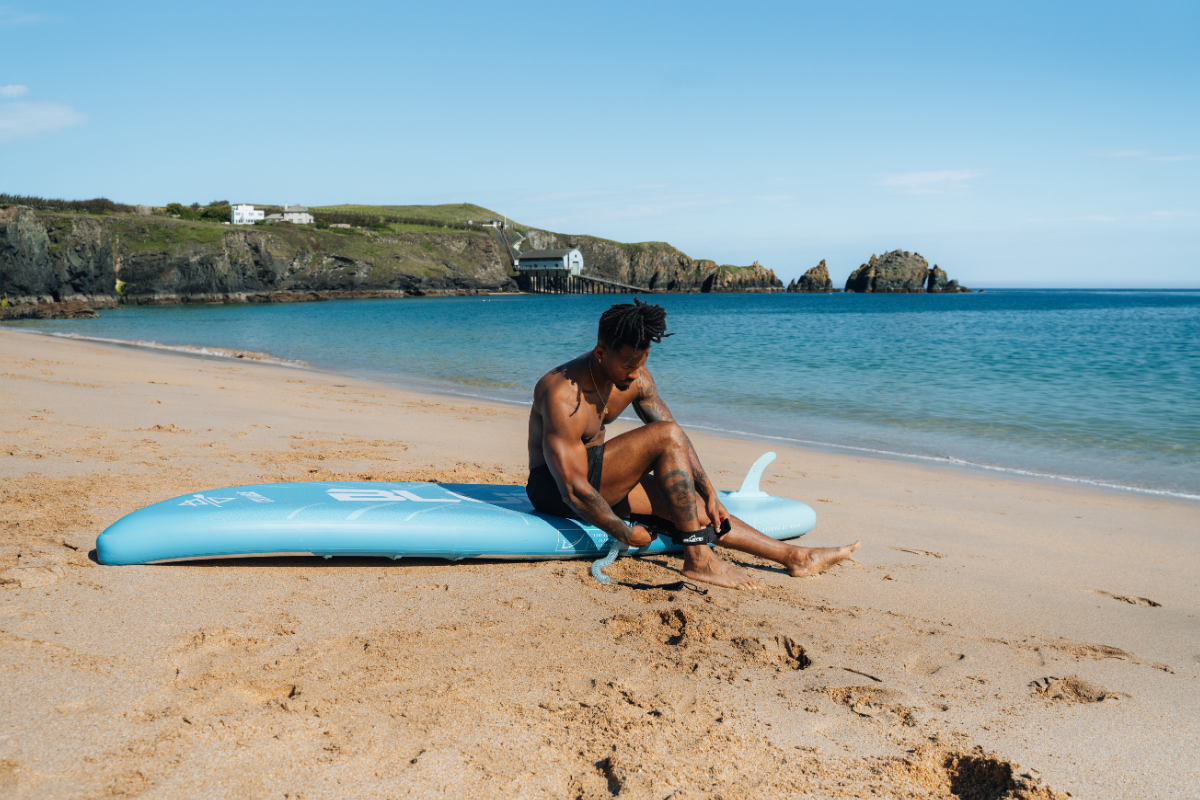

Sometimes the most useful thing you can do after a demanding week is get away from four walls, put your phone somewhere safe and spend an hour moving across the water. Paddleboarding is not a treatment for anxiety, depression or chronic stress. What it can provide is a combination that modern life often lacks: movement, natural daylight, open space, changing scenery and focused time away from screens.
That combination helps explain the growing interest in paddleboarding for mental health and general wellbeing. Research reviewed by WHO Europe has found an overall positive relationship between green and blue spaces and mental health, while the World Health Organization recognises regular physical activity as beneficial for mental wellbeing.
For European paddlers, SUP can bring both together. From Germany's lakes and the canals of the Netherlands to Alpine waters, Atlantic coastlines and sheltered Mediterranean bays, paddleboarding provides a practical reason to spend more time outdoors.
Why Paddleboarding for Mental Health Can Feel So Restorative
A gym session gives you exercise. Sitting beside a lake gives you a change of scenery. A walk gets you outdoors. Paddleboarding combines elements of all three.
You are moving while responding to the water, your balance, your paddle stroke, the wind and the landscape around you. Your attention has somewhere immediate to go. Instead of thinking about the next email, tomorrow's deadline or everything still sitting on your to-do list, you have to notice what is happening beneath your feet. That change in attention is one reason a gentle paddle can feel mentally different from exercising indoors.
European research into blue spaces has explored how environments containing water may support health and wellbeing. The EU-funded BlueHealth project specifically investigated connections between blue spaces, physical activity and mental wellbeing across Europe. That does not mean simply standing beside water automatically improves your mental health. What matters is the bigger picture: you are outside, active, away from many everyday demands and interacting with a natural environment.
Blue Space and Mental Health: Why Water Changes the Experience
“Blue space” is the term commonly used for environments where water is a prominent feature.
For paddleboarders in Europe, that could mean:
A Bavarian or Brandenburg lake in Germany
A Dutch canal or recreational lake
An Alpine lake in Austria
A sheltered bay along the Croatian coast
A French river or Atlantic lagoon
A calm Mediterranean bay in Spain or Italy
A Scandinavian lake surrounded by forest
WHO Europe has reported that green and blue spaces can contribute to health and wellbeing, while European environmental bodies recognise these environments as places that can encourage physical activity, recreation and social interaction.
For paddleboarders, the important part is often what happens to your attention once you launch.
Water Gives Your Brain Something Simple to Focus On
Think about what you notice during a slow paddle. Your paddle enters the water. The board glides forwards. Light changes across the surface. Small waves move underneath your feet. Birds cross the shoreline. Your body makes constant, tiny corrections to stay balanced. You are occupied without necessarily being overloaded. That distinction matters.
Many everyday activities require concentrated attention: messages, meetings, traffic, social media, deadlines and constant decision-making. A relaxed SUP session requires attention too, but it is directed towards something immediate and physical. Where do I place the paddle? Which way is the wind moving? What is happening on the water ahead? That can provide a useful break from repetitive thoughts.
Open Water Can Give Problems a Different Sense of Scale
Stress tends to narrow attention. One problem can gradually become the only thing you are thinking about. Paddling somewhere with an open view can physically change that environment. Suddenly your field of vision contains a shoreline, mountains, reeds, clouds or a wide horizon rather than another wall or screen.
The problem has not disappeared, but your attention is no longer trapped inside it. For many paddlers, that change of perspective is part of what makes time on the water valuable.
Why Daylight Matters for Mental Wellbeing
The “sun” part of water and sun needs some context. You do not need 30°C temperatures and a cloudless Mediterranean sky to benefit from getting outside. Natural daylight matters even when it is cloudy. Light exposure is one of the main environmental signals involved in regulating our circadian rhythm the internal system that helps determine when we feel awake and when our body prepares for sleep.
For Europeans living further north, this becomes particularly noticeable as the seasons change. A summer evening in northern Germany, Denmark or Sweden can provide hours of usable daylight after work. During winter, however, daylight hours become much shorter. Getting outside during the daytime therefore becomes particularly valuable when much of the working day is otherwise spent indoors.
Think Daylight, Not Sunbathing
There is also an important distinction between getting outdoors and deliberately trying to maximise sun exposure. A paddleboard provides very little shade, and UV exposure can be significant around open water. In southern Europe especially, a midday paddle during high summer can mean intense heat and sun. In those conditions, an early-morning or evening paddle may be considerably more comfortable.
Useful summer paddling kit can include:
High-protection sunscreen
UV-protective sunglasses
A hat or cap
Lightweight sun-protective clothing
Plenty of drinking water
Suitable footwear when launching from hot, rocky or rough shorelines
Sun protection matters in central and northern Europe too. Temperature is not a reliable measure of UV exposure. The aim is simple: enjoy natural daylight without treating sunburn as part of the experience.
Paddleboarding Is Meaningful Physical Activity
Another reason paddleboarding can support wellbeing is much simpler: you are moving. SUP requires repeated upper-body movement, core stability, balance and continuous small muscular adjustments through the feet and legs. How demanding it becomes depends largely on how you paddle. A beginner might spend 30 minutes exploring a sheltered lake. A recreational paddler might cover several kilometres along the shoreline. A touring paddler might spend most of the day travelling from one location to another. None of those sessions needs to become a maximal workout to be worthwhile.
The World Health Organization recommends regular physical activity for adults and notes that physical activity contributes to the prevention and management of several mental health conditions while supporting general wellbeing. You do not need to turn every SUP session into fitness training. If your main reason for paddling is to decompress after work, a slow hour around your local lake can be exactly the right session.
Paddleboarding Can Become Active Mindfulness
Telling yourself to stop thinking about something rarely works. Giving your attention another job can be much more effective. Paddleboarding naturally requires a simple sequence:
Reach forwards.
Place the paddle.
Apply pressure.
Complete the stroke.
Recover.
Look ahead.
Adjust your balance.
Repeat.
That repetitive movement can create a form of active mindfulness. You do not have to sit completely still or attempt to empty your mind. Instead, you are bringing your attention back to a simple physical task.
Try a Ten-Stroke Reset
Once you are somewhere safe and conditions are calm, spend ten strokes concentrating only on:
Where the blade enters the water
The pressure you feel through the paddle
How quietly the blade leaves the water
Your breathing
The movement underneath your feet
Then look around and identify three details you had not noticed before. Perhaps it is the shape of the shoreline, sunlight reflecting between trees or a bird moving across the lake. The objective is not to paddle perfectly. It is simply to reconnect your attention with where you actually are.
Small Improvements Can Build Confidence
Mental wellbeing is not only about relaxation. Achievement can matter too. One of the enjoyable things about paddleboarding is that progress is easy to recognise.
You might:
Stand up confidently for the first time
Paddle your first kilometre
Learn an efficient turn
Improve your forward stroke
Become comfortable climbing back onto your board
Explore a new lake
Complete your first longer route
Learn how to read changing conditions more confidently
These are relatively small achievements, but small wins can make an activity rewarding enough to keep returning to. A beginner who spends their first session staring at their feet may eventually find themselves paddling comfortably while looking across the horizon. That progression feels good. It also gives you something positive to plan.

Germany Is a Good Example of Everyday SUP Culture
Germany is particularly well suited to this kind of recreational paddleboarding. You do not necessarily need to travel to the coast. Lakes and inland waterways make SUP accessible from many parts of the country, whether that means an evening session close to home or a longer weekend paddle.
Think of places such as:
Mecklenburg's lake districts
Brandenburg's extensive waterways
Bavarian lakes
Smaller local Badeseen
Reservoirs and recreational lakes
Designated sections of rivers and canals
For many paddlers, the best mental-health paddle is not the spectacular destination three hours away. It is the lake you can reach after work. That principle applies across Europe. A nearby recreational lake in Austria, France, Belgium, Poland or the Netherlands may become far more useful to your routine than somewhere famous you visit once a year.
Always check whether SUP is permitted before launching. Access rules, protected areas, navigation requirements and equipment obligations can vary between countries, regions and individual waterways.
Solo Paddle or Paddle With Other People?
Solo Paddling
A carefully planned solo session can provide something increasingly difficult to find: uninterrupted quiet. There is no conversation to maintain and no need to match another person's pace. You can paddle slowly, stop for a few minutes or simply watch the water. For someone whose working week involves meetings, customers, commuting or constant communication, solitude can be restorative rather than isolating.
Solo paddling does require greater preparation. Tell somebody where you are going, understand your route, check conditions and carry appropriate safety and communication equipment.
Social Paddling
Other people may get more from paddling with friends, a partner or a local SUP group. There is exercise, conversation and shared experience without needing to sit in a café or plan an elaborate day out. Paddling side by side also makes conversation feel different.
You can talk when you want and paddle quietly when you do not. The wider Bluefin ambassador community reflects this social side of SUP, bringing together paddlers who explore, learn and share their experiences on the water.
A Simple Paddleboarding Wellbeing Routine
A useful wellbeing paddle does not need to involve an ambitious route. It should be easy enough that you will actually do it again.
Stage |
What to Do |
Why It Helps |
Before launching |
Check weather, wind, access rules and equipment |
Reduces avoidable stress |
First 5 minutes |
Paddle slowly and settle your balance |
Lets your body adjust |
Next 10 minutes |
Find a comfortable rhythm |
Encourages relaxed movement |
Next 10 minutes |
Look around instead of at the board |
Directs attention towards your surroundings |
Mid-session |
Pause somewhere safe |
Creates time to observe the environment |
Return |
Maintain an easy, steady pace |
Keeps the session restorative |
After paddling |
Avoid immediately checking work messages |
Extends the mental break |
The 30-Minute Version
When you only have half an hour:
5 minutes: easy paddling and warm-up.
10 minutes: steady continuous movement.
5 minutes: slow down and deliberately notice your surroundings.
5 minutes: pause or drift safely.
5 minutes: paddle back.
You do not need a two-hour expedition every time. Thirty minutes on a local lake after work is still a paddle.
Choosing a Paddleboard for Relaxed Recreational Paddling
If wellbeing is one of your reasons for getting into SUP, your equipment should remove barriers rather than create them. Before choosing a board, consider your real routine. Do you live in an apartment? Will you use public transport? Do you need to carry the board from a car park to a lake? Are you primarily paddling calm inland water? Do you eventually want to cover longer distances?
The best choice is rarely the board with the longest list of features. It is the board that suits how and where you actually paddle.
Bluefin Lite: When Portability Matters
The Bluefin Lite is designed around a lighter, more portable setup suited to casual and beginner paddling. That can be particularly useful in European cities where storing and transporting a full SUP setup can be one of the biggest practical barriers to getting outside.
If you regularly walk to the water, live upstairs or travel by train, reducing the effort required before you even launch can make spontaneous paddles much more realistic.
Bluefin Cruise: A Versatile All-Round Option
The Bluefin Cruise is designed as an all-round inflatable SUP suited to recreational use and progression. That makes sense for paddlers whose routine might start with short sessions on a sheltered lake but gradually expand into longer weekend paddles. You want enough stability to relax while still having the freedom to explore.
Bluefin Carbon: When Longer Paddles Become the Goal
For paddlers who progress towards longer routes and want a more performance-focused setup, the Bluefin Carbonprovides another option within the range. That does not mean a more advanced board provides greater mental-health benefits.
Enjoyment is more important than specification. A quiet 40-minute paddle on a simple setup can be more restorative than an exhausting session on the most technical board available.
Different Parts of Europe Require Different Planning
Europe does not have one universal paddling environment. A SUP session on a warm Croatian bay is very different from paddling an Alpine lake, North Sea coastline or Scandinavian waterway.
Central Europe
Germany, Austria, Switzerland and neighbouring regions offer exceptional inland paddling, but mountain and large-lake conditions can change quickly.
Wind, thunderstorms and cold water deserve particular attention.
Northern Europe
Denmark, Sweden, Finland and other northern regions offer extraordinary access to lakes and coastlines.
The main consideration outside summer is often cold water rather than cold air. A sunny spring day can feel warm while the water remains dangerously cold.
Southern Europe
Spain, Portugal, Italy, Croatia, Greece and southern France can provide long paddling seasons.
Here, heat, UV exposure, afternoon winds and busy summer waterways may be bigger concerns.
Early paddles can be ideal: quieter water, cooler temperatures and softer morning light.
Western European Rivers and Canals
France, Belgium and the Netherlands provide plenty of inland opportunities, but waterways may also be used by commercial or recreational boats.
Understanding local navigation rules and staying visible is essential.
There is no single set of rules covering recreational SUP use across every European waterway. Check the relevant local authority, waterway manager or protected-area guidance before launching.
Water Quality Is Worth Checking Too
Most paddlers naturally think about wind and weather first. Water quality deserves attention as well, particularly during warm periods or after heavy rainfall.
The European Environment Agency monitors thousands of designated bathing waters across Europe. Its 2026 assessment reported that most EU bathing waters met high standards, although conditions and classifications vary between individual locations. If your local authority has issued warnings about pollution, harmful algal blooms or unsafe water conditions, choose another location. A wellbeing paddle should not involve taking unnecessary risks.
Autumn and Winter Paddleboarding in Europe
Summer makes paddleboarding easy. The challenge is maintaining an outdoor routine once temperatures fall. Cool-season SUP can be exceptionally peaceful, particularly on European lakes that become crowded during July and August. But the risk profile changes.
Water temperature matters more than how warm you feel standing on shore.
Dress for immersion, not just the forecast. Depending on your location and conditions, that may mean suitable thermal layers, a wetsuit or drysuit, appropriate flotation equipment and a much more conservative route. If conditions are beyond your experience, do something else outdoors. Walk around the lake. Head to the coast. Spend your lunch break outside. The objective is not to protect an artificial paddling streak.
The objective is to maintain the habit of moving outdoors and spending time in environments that help you decompress.
Beginner Mistakes That Can Make a Relaxing Paddle Stressful
1. Ignoring Wind
Wind is one of the biggest factors affecting SUP. A lake can look perfectly calm from the shore while a growing breeze makes the return journey significantly harder. Check conditions before launching and continue monitoring them while you paddle.
2. Choosing a Famous Location Instead of a Suitable One
Instagram-friendly destinations are not automatically good beginner paddling locations. Crowds, boat traffic, exposed water and difficult launches can add unnecessary stress. A quiet local lake can provide a better session.
3. Turning Every Paddle Into a Workout
You do not need to measure speed, distance, calories and average pace every time you launch. Some days performance data is motivating. Other days it is simply another target. Allow yourself to paddle slowly.
4. Spending the Whole Session Taking Photos
Take the photograph. Then put the phone away. Give yourself ten or fifteen minutes where the experience does not need to be uploaded, recorded or shared.
5. Copying Safety Advice From Another Country
Rules and best practices can differ between locations. A leash arrangement suitable for one environment may be inappropriate in another, particularly where there is flowing water, current or snag hazards. Research the location rather than assuming every European paddle spot works the same way.
6. Forgetting That Cold Water Can Exist on Warm Days
This is especially relevant around Alpine lakes, northern Europe and early-season paddling.
Sunshine can make the air feel comfortable while the water remains extremely cold.
Plan for the water you might fall into, not just the weather you hope to enjoy.
Paddleboarding Should Support Mental Health, Not Replace Healthcare
It is important to be clear about what paddleboarding can and cannot do. Physical activity can support wellbeing. Blue spaces can feel restorative. Daylight helps regulate normal sleep-wake rhythms. Being outdoors can provide distance from a stressful environment. But paddleboarding is not a replacement for professional mental healthcare.
If you are experiencing persistent depression, severe anxiety, trauma or another significant mental health difficulty, appropriate professional support remains important. Paddleboarding can simply become one part of a wider approach to wellbeing.
That might include:
Regular movement
Time outside
Social connection
Good sleep habits
Time away from screens
Meaningful hobbies
Appropriate healthcare or psychological support

Make Paddleboarding Easy Enough to Repeat
The mental-health value of SUP is unlikely to come from one spectacular holiday paddle. It is more likely to come from repetition. That means reducing friction.
Build a Simple Routine
Keep your paddling equipment stored together.
Find two or three reliable local launch locations.
Learn which wind directions suit those locations.
Check access rules before trying somewhere new.
Arrange weekday paddles before your calendar fills up.
Invite a friend when motivation is low.
Accept that short paddles still count.
Avoid measuring every session against your previous one.
You might live hundreds of kilometres from the sea and still have excellent paddling close to home.
That is particularly true across much of Germany and central Europe, where inland lakes and recreational waterways can make regular SUP far more realistic than occasional coastal trips.
The best wellbeing paddle spot may simply be the one you can reach most easily.
Choosing Equipment That Lasts
If paddleboarding becomes part of your long-term routine, durability matters. Equipment that lasts means fewer replacements, less hassle and a setup you become familiar with over time. Our Built to Last approach focuses on durability and extending the useful life of its paddleboards.
That principle also connects naturally with enjoying Europe's waterways responsibly. The Bluefin Eco Positive approach focuses on reducing environmental impact and keeping sustainability connected to the outdoor environments paddlers value. Looking after the places where we paddle should be part of enjoying them.
Summary: Why Water + Sun Matters
The value of paddleboarding for mental health does not come from one magical ingredient. It comes from the combination.
A paddle can provide:
Movement, supporting physical and mental wellbeing.
Blue space, giving you time in and around natural water environments.
Natural daylight, helping you spend more of the day outside.
Focused attention, because paddling and balance keep you connected to what is happening now.
Time away from screens, notifications and indoor environments.
Small achievements, from standing confidently to completing a new route.
Social connection or solitude, depending on what you need.
A reason to explore nature, from local lakes to European coastlines.
Europe offers extraordinary variety for stand up paddleboarding, but you do not need to travel to Lake Garda, Croatia or the Mediterranean to experience these benefits. Your local lake in Germany, Austria, France, the Netherlands or elsewhere in Europe may be far more useful.
The best paddle is not necessarily your longest, fastest or most impressive. It might simply be an ordinary Tuesday evening when work has been relentless and you spend forty quiet minutes moving across familiar water When you return to shore, the same responsibilities are still there. They just have a little more space around them.
Share:
Multi-Day Paddleboarding Adventures in Europe Guide
Coastal vs Inland Paddleboarding Europe: Which Is Better?